
Mobile Market vs Farmers Market: Which Reaches More People?
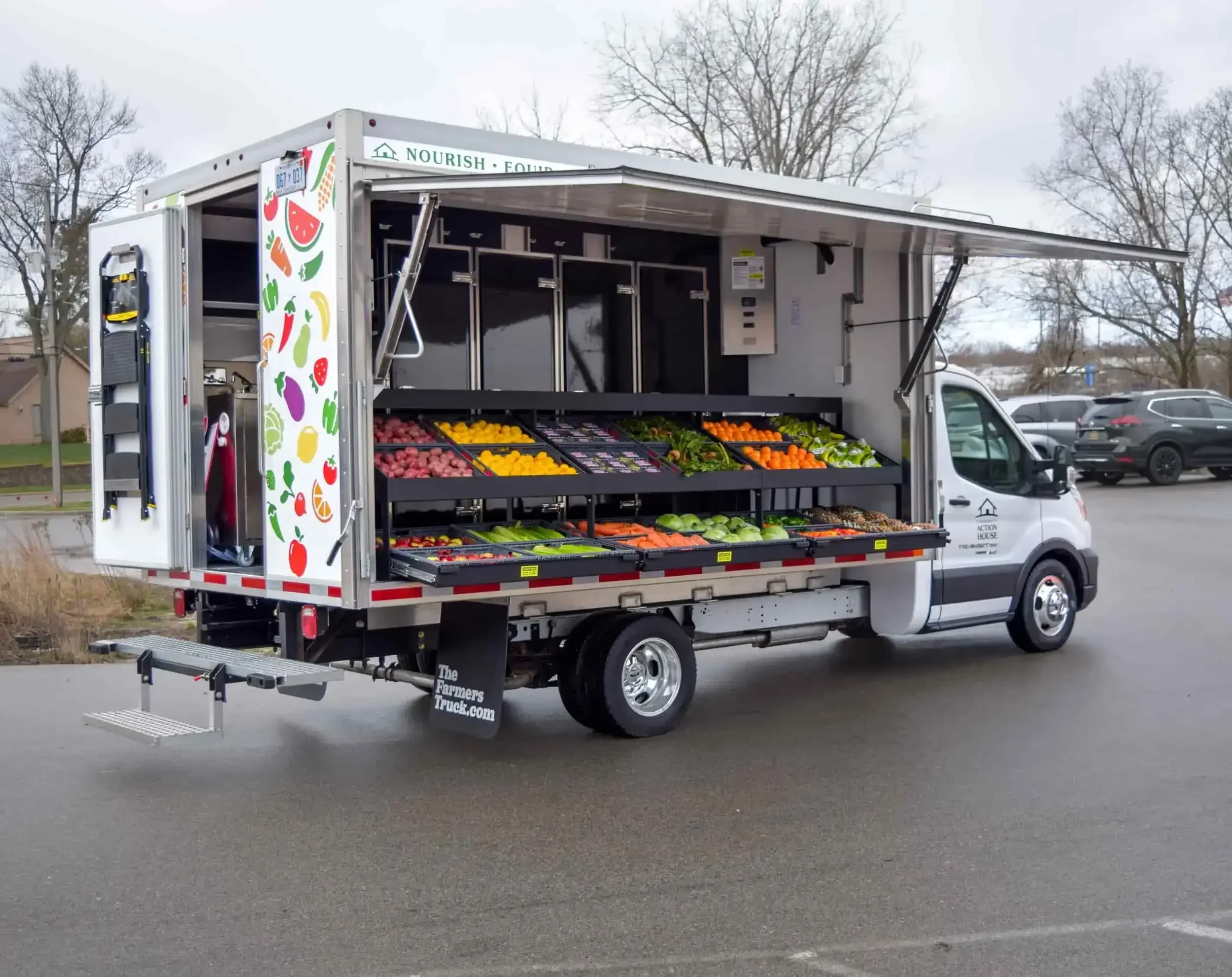
Both mobile markets and farmers markets connect communities with fresh food. They do it in fundamentally different ways, with different strengths and limitations. Understanding the distinction helps communities, funders, and operators choose the right model.
How Farmers Markets Work
A farmers market is a stationary event where multiple vendors gather at a fixed location on a regular schedule. Typically weekly during growing season. Customers come to the market, browse multiple booths, and buy directly from farmers.
The model has real strengths. Variety is high because multiple vendors offer different products. Direct farmer-to-consumer connection builds relationships and supports local agriculture. The event atmosphere creates community gathering space.
But the model has structural limitations for fresh food access. Markets require customers to travel to a central location. For someone without a car, that might mean bus transfers, long walks, or simply not going. Markets typically operate limited hours. Saturday morning is common. That excludes people working those shifts.
Customer demographics at farmers markets skew toward people with transportation, schedule flexibility, and disposable income. Studies consistently show that farmers market shoppers are disproportionately white, higher-income, and already health-conscious. The markets serve an important function, but they're not reaching everyone.
How Mobile Grocery Markets Work
A mobile market is a single operator that travels to customers rather than asking customers to come to a fixed location. The vehicle, whether truck, van, or trailer, visits multiple stops on a rotating schedule, bringing groceries directly into neighborhoods.
The model inverts the access equation. Instead of requiring a 15-minute drive to a market, the mobile grocery store stops within walking distance of residents. Instead of operating only Saturday mornings, it can visit different areas on different days, matching community schedules.
Mobile produce markets typically offer less variety than a multi-vendor farmers market. One truck can only carry so much. But they offer enough for weekly shopping: produce, eggs, dairy, bread, and often pantry staples. For communities without nearby grocery stores, 'enough' beats 'nothing.'
Reach and Access Comparison
The question of which model 'reaches more people' depends on what you're measuring.
Counting total visitors at a single event, traditional farmers markets often serve far more people. According to national farmers market surveys, large, well-established markets can attract 1,000–3,000 visitors on a busy day.
Mobile market stops typically serve 30–80 households per stop, according to USDA reporting, operator surveys, and the Farmers’ Truck impact data. This is by design. The goal isn’t volume, it’s targeted access.
Measuring access for underserved populations? Mobile markets often perform better. They show up where people live. They accept SNAP/EBT seamlessly. They serve areas that farmers markets don't reach because the demographics don't support a traditional market.
Geographic coverage favors mobile markets. One vehicle visiting 15 stops per week can serve 15 different neighborhoods. One farmers market serves one location.
Time flexibility favors mobile markets. They can operate any day, at times that match community needs. After school. Early evening. Lunch hours at senior centers.
What Research Shows
Studies comparing food access interventions generally find that mobile markets are more effective at reaching food-insecure populations than farmers markets. The transportation barrier is real, and removing it matters.
SNAP redemption rates at mobile markets tend to be higher than at farmers markets. That suggests they're reaching more customers who depend on food assistance.
Customer demographics at mobile markets more closely mirror the communities they serve. Farmers market demographics often don't match surrounding neighborhood income and racial composition.
This doesn't mean farmers markets are bad. They serve important functions. But if the goal is specifically improving fresh food access for underserved communities, mobile markets are often the more effective tool.
When Each Model Makes Sense
Farmers markets work well when there's already a customer base with transportation and purchasing power. When supporting local farmers is a primary goal. When creating community gathering space matters. When operating costs need to be distributed across multiple vendors.
Mobile markets work well when transportation is a barrier. When the goal is reaching specific underserved areas. When flexibility in timing and location matters. When a single operator can manage the logistics.
Complementary, Not Competing
The models can coexist and even complement each other. A community might have a thriving farmers market downtown that serves one population, while a mobile grocery market serves neighborhoods the farmers market doesn't reach.
Some mobile markets source from farmers market vendors, creating supply chain connections. Some farmers who sell at markets also supply mobile market operators.
The question isn't which model is 'better' in absolute terms. It's which model fits the specific access problem you're trying to solve.
For more on how mobile markets operate, see: What Is a Mobile Market?
Planning a mobile market?
Get the year-one budget worksheet we use with every new operator. Vehicle, equipment, staffing, produce, insurance, contingency. Opens as a Google Sheet you can copy and edit.
Built from 60+ programs launched in 26 states.
