
Mobile Market Costs: What to Budget for Year One
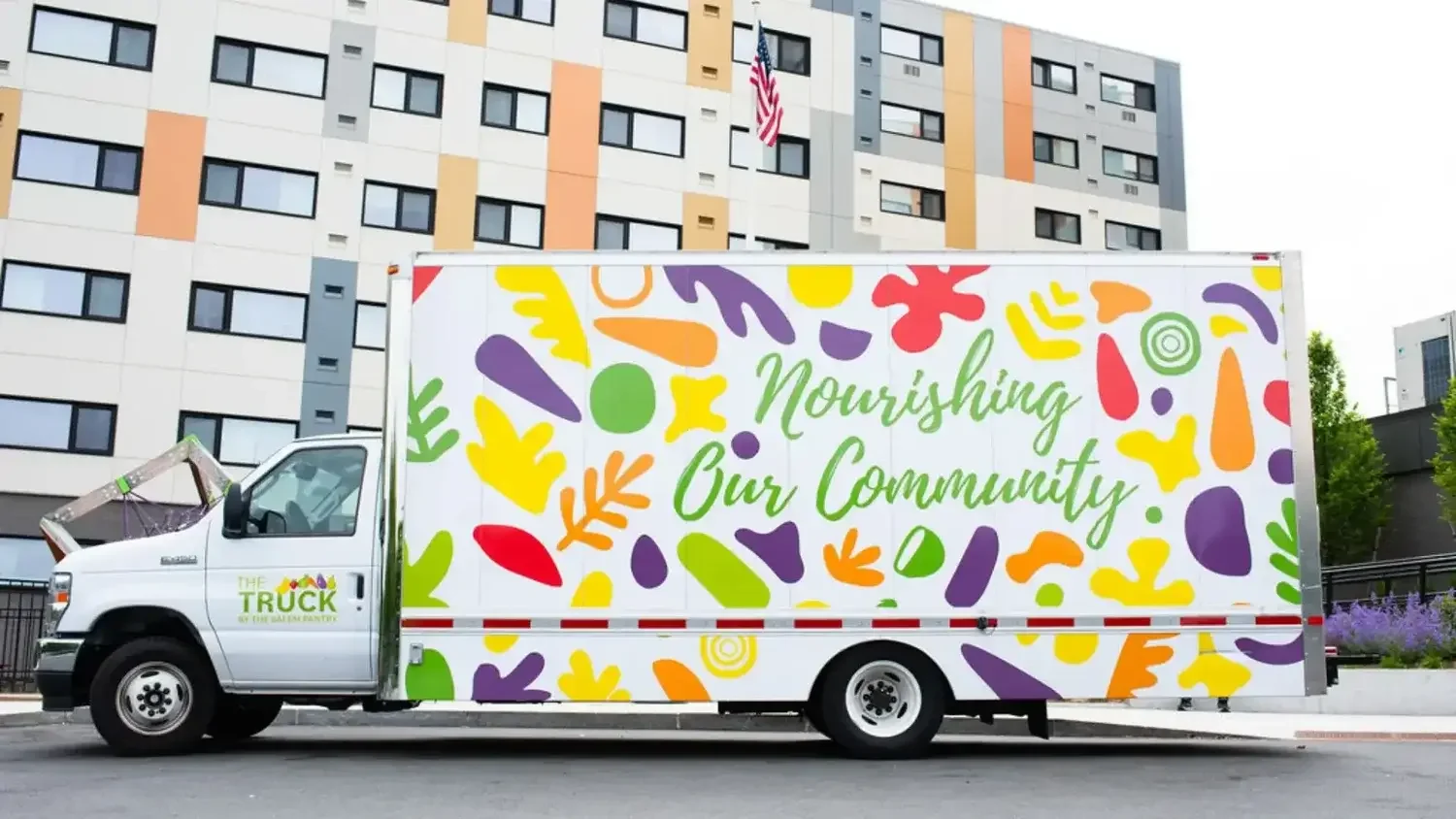
The question 'how much does a mobile market cost?' doesn't have a single answer. It depends on vehicle choice, operating model, staffing approach, and scale. But we can provide realistic ranges based on what programs actually spend.
This breakdown covers startup costs and first-year operations.
Startup Costs: The Vehicle
The vehicle is typically the largest single expense.
A purpose-built mobile market truck with refrigeration, display fixtures, generator, and professional finishing runs $150,000 to $500,000. Higher-end builds with more capacity, better refrigeration, and custom features push toward the top of that range.
A mobile market trailer with similar capabilities costs $100,000 to $170,000. But you'll need a tow vehicle. If you don't already have one, add $50,000 to $800,000 for a capable truck.
A converted cargo van or small box truck with basic refrigeration and shelving runs $750,000 to $150,000. Capacity and customer experience are limited, but it's a lower entry point.
Used vehicles can reduce costs by 30 to 50 percent. Factor in higher maintenance risk and shorter useful life.
Startup Costs: Equipment and Systems
Beyond the vehicle itself, you'll need supporting equipment.
POS system with EBT capability: $500 to $2,500 for hardware, plus monthly software fees. Tablet-based systems are common for mobile operations.
Scales for produce: $200 to $500 for commercial-grade scales.
Tents, tables, and outdoor display equipment (if applicable): $500 to $2,000.
Initial inventory: $3,000 to $8,000 depending on product range. This is working capital that cycles through as you sell and restock.
Signage and marketing materials: $1,000 to $3,000 for vehicle graphics, banners, flyers, and launch promotion.
Miscellaneous supplies (bags, receipt paper, cleaning supplies): $500 to $1,000.
Total equipment and setup beyond vehicle: $6,000 to $17,000.
First-Year Operating Costs
Operating costs vary significantly based on scale and staffing model.
Staffing is typically the largest operating expense. A full-time driver/operator at $35,000 to $50,000 annually is the baseline. Add a part-time assistant or market manager and you're at $50,000 to $80,000 in labor costs. Volunteer-heavy models reduce this but require volunteer coordination.
Fuel costs depend on routes and vehicle efficiency. For a refrigerated food truck running 15 to 20 stops per week across a metro area, budget $8,000 to $15,000 annually.
Vehicle maintenance includes regular service, repairs, and eventual major maintenance items. Budget $5,000 to $12,000 annually for a new vehicle. More for used.
Insurance covers commercial auto, general liability, and potentially product liability. Expect $6,000 to $15,000 annually depending on coverage levels and location.
Inventory replenishment is ongoing working capital, not a fixed cost. You buy product, sell it, and buy more. Net inventory cost depends on pricing model. Programs selling at cost have minimal net inventory expense. Programs subsidizing prices absorb the difference.
POS and software fees run $50 to $200 monthly. That's $600 to $2,400 annually.
Permits and licensing vary by jurisdiction: $200 to $1,500 annually.
Administrative overhead (accounting, communications, supplies) adds $2,000 to $5,000.
First-Year Budget Scenarios
Lean startup with trailer and volunteers: Vehicle and trailer $150,000, equipment $8,000, operating costs $40,000. Total first year: approximately $198,000.
Mid-range program with truck and paid staff: Vehicle $190,000, equipment $12,000, operating costs $95,000. Total first year: approximately $297,000.
Robust program with premium vehicle and full staffing: Vehicle $275,000, equipment $15,000, operating costs $130,000. Total first year: approximately $420,000.
These are illustrative ranges, not precise quotes. Your actual costs depend on local factors, specific choices, and operational decisions.
Revenue Expectations
Mobile market revenue depends on stops, customers per stop, and average transaction size.
A program running 15 stops per week, averaging 30 customers per stop at $18 average transaction, generates roughly $8,100 per week or $420,000 annually in gross sales. With 40 to 50 percent gross margins, that's $168,000 to $210,000 in gross profit to cover operating costs.
That sounds viable. Until you account for the reality that many stops take months to build to 30 customers. Average transactions vary widely. Gross margins on subsidized pricing are lower.
Most mission-driven mobile grocery stores don't cover their full costs through sales. They require ongoing grant support, organizational subsidy, or partner funding / sponsorship. Planning for this from the start is more realistic than expecting self-sufficiency.
Budgeting Advice
Build contingency into your budget. Things cost more than expected. Revenue ramps slower than hoped. Surprises happen. Add a 15 to 20 percent contingency on your estimates to provide a cushion.
Secure operating funding alongside startup funding. A vehicle without an operating budget sits unused. Many funders will support startup costs. Fewer commit to ongoing operations. Line up both.
Plan for year two and three, not just launch. Sustainable programs require sustainable funding. A one-year grant that covers launch but not ongoing operations sets you up for a cliff.
For more on mobile market operations and planning, see: What Is a Mobile Market?
Planning a mobile market?
Get the year-one budget worksheet we use with every new operator. Vehicle, equipment, staffing, produce, insurance, contingency. Opens as a Google Sheet you can copy and edit.
Built from 60+ programs launched in 26 states.
