
How Food Hubs Can Add a Retail Channel with Mobile Markets
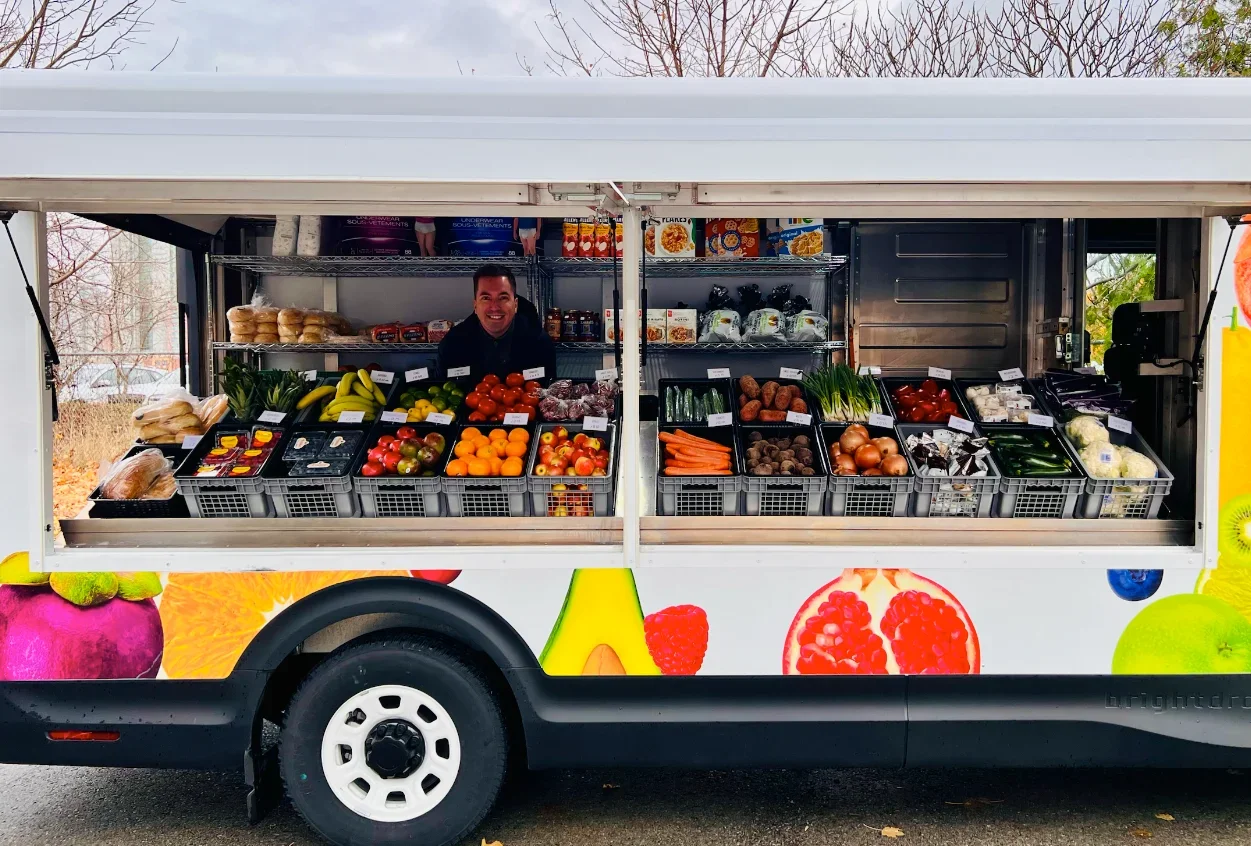
Food hubs aggregate, distribute, and market local food. They connect farms to buyers at a scale that individual farms can't achieve. Most food hub sales go to wholesale channels: restaurants, institutions, grocery stores.
But a mobile market offers a path to retail sales that can diversify revenue and deepen community connection.
Why Food Hubs Consider Retail
Wholesale has advantages. Larger orders. Predictable schedules. Fewer transactions. But it also has constraints that retail can address.
Margin capture: Wholesale buyers expect wholesale pricing. Retail sales capture the margin that would otherwise go to the retailer. A case of tomatoes sold to a restaurant at $20 might sell to consumers at $40 through a mobile market.
Outlet for imperfect product: Wholesale channels often demand uniformity. Produce that's perfectly good but wrong-sized, oddly shaped, or in small quantities may not fit wholesale requirements. Retail channels are more forgiving.
Demand smoothing: Wholesale orders spike and dip based on buyer schedules. Retail sales provide steadier baseline demand that helps with planning and reduces waste.
Community visibility: Wholesale happens behind the scenes. A mobile produce market creates direct community presence, building awareness and support for the local food system the hub represents.
Why Mobile Markets Fit Food Hubs
Several mobile market characteristics align with food hub operations.
You already have the product. The sourcing, aggregation, and quality control infrastructure exists. Adding a retail endpoint requires distribution, but not entirely new supply chains.
You know local food. Mobile markets emphasizing local sourcing match food hub missions. The products you carry naturally tell a local food story.
You have producer relationships. Farmers who sell through the hub can be featured at the mobile market. Their stories add value. The market becomes a showcase for your supply network.
Logistics capability exists. You already manage distribution: receiving, storing, packing, routing. A mobile market adds complexity but doesn't require building logistics from scratch.
Implementation Considerations
Adding a mobile market to a food hub operation involves decisions on several fronts.
Product selection bridges wholesale and retail. Some products you handle for wholesale work well at retail. Others might not. Retail customers want variety, reasonable portions, and products ready to use. Your wholesale product mix may need adjustment.
Pricing requires retail thinking. Wholesale pricing is cost-plus for business buyers. Retail pricing is value-based for consumers. You're competing with (or complementing) grocery stores, farmers markets, and other retail options. Price accordingly.
Staffing and operations differ from warehouse work. Customer-facing retail requires different skills. Service orientation. Sales ability. Community engagement. Don't assume wholesale staff will automatically excel in a retail customer-facing environment..
Brand and marketing need development. Your wholesale brand may be invisible to consumers. A mobile grocery market needs consumer-facing identity, marketing, and community presence. This is new muscle for most food hubs.
Financial Reality Check
Mobile markets can add revenue, but they also add costs. Be realistic about the financial picture.
Vehicle, equipment, staffing, and operations require investment. A mobile market isn't free incremental revenue on existing infrastructure. It's a new channel with its own cost structure.
Scale matters. A mobile market selling $3,000 per week in groceries at 40% margin generates $1,200 gross profit weekly. If operations cost $1,000 weekly, the contribution is $200. That might be worthwhile for strategic reasons. But it's not transformative financially.
Food hubs that succeed with mobile markets typically treat them as part of a larger strategy rather than expecting standalone profitability. This can include community presence, delivery on a mission, or acting as an outlet for surplus produce.Integration with Wholesale Operations
The cleanest implementations integrate mobile market operations with existing logistics.
Share inventory systems and track retail-destined product through the same systems as wholesale. Avoid creating separate, disconnected operations.
Consider coordinating purchasing as well. Buy for both channels together when possible. Retail needs may be met from the same cases as wholesale orders, and this could increase your margins for both wholesale and retail.
Use retail to absorb wholesale gaps. When a wholesale order falls through or product arrives in excess, retail provides an outlet. This flexibility has real value and reduces waste.
But maintain boundaries. Retail customers expect consistent availability. Don't treat the mobile market as a dumping ground for whatever wholesale didn't take. Balance flexibility with reliability.
For more on commercial mobile market approaches, see: The Mobile Grocery Store Model.
Planning a mobile market?
Get the year-one budget worksheet we use with every new operator. Vehicle, equipment, staffing, produce, insurance, contingency. Opens as a Google Sheet you can copy and edit.
Built from 60+ programs launched in 26 states.
