
Mobile Markets for Hospitals and Health Systems
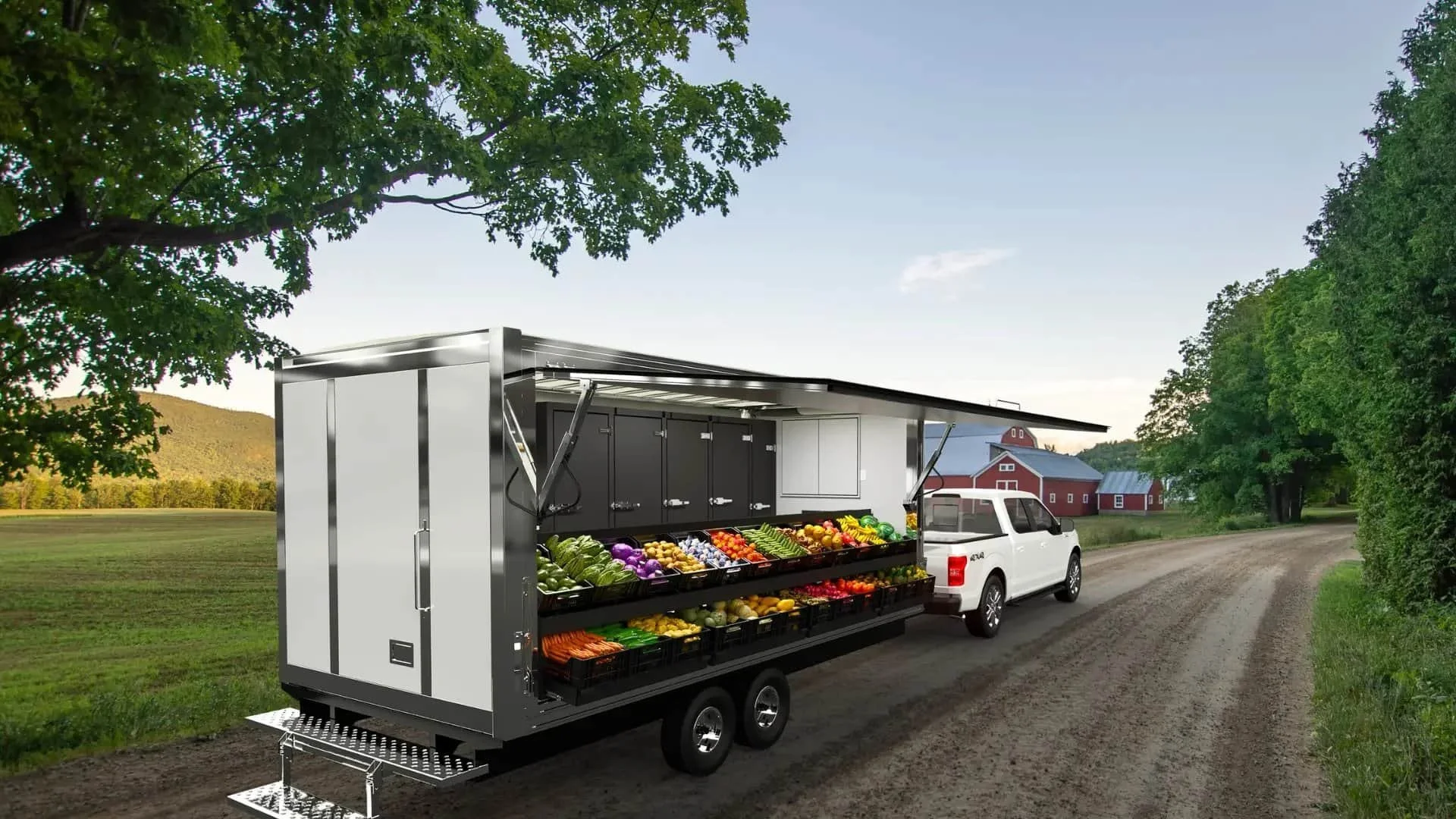
Hospitals invest heavily in treating diet-related chronic disease. Diabetes, hypertension, heart disease, obesity. Then patients go home to neighborhoods where access to healthy food barely exists. The clinical intervention works but the food environment undermines it.
Mobile markets give health systems a direct way to close this gap. A mobile grocery store that visits hospital campuses, clinics, and patient neighborhoods makes dietary recommendations actually achievable. It's not a complete solution to food insecurity or chronic disease, but it's one of the most concrete food as medicine interventions available.
This guide covers why hospitals are building mobile market programs, how they work in practice, what the evidence shows, and what implementation requires.
Why Hospitals Are Adding Mobile Markets
Several forces have pushed food access onto health system agendas.
Food insecurity screening has become common in clinical settings. Many hospitals now ask patients about their ability to access adequate food. What they find is striking. In underserved areas, 15 to 30 percent of patients screen positive. The uncomfortable question follows: what do we do about it? Screening without a pathway to intervention frustrates everyone.
The food as medicine framework has gained traction among healthcare leaders. The argument is direct. Diet contributes to disease. Patients lack access to healthy food. Addressing food access is therefore a legitimate healthcare intervention, not charity or community relations. Some insurers now cover produce prescriptions for high-risk patients. Mobile markets fit this logic.
Community benefit requirements create another driver. Nonprofit hospitals must demonstrate community benefit to maintain tax-exempt status. Mobile market programs count toward these requirements while also addressing genuine need.
There's also a practical reality. You can't prescribe a grocery store into existence. Patients can't drive twenty minutes when they lack transportation. Delivery apps exclude households without smartphones or credit cards. A mobile produce market that shows up in the hospital parking lot brings food access to patients.
How Hospital Mobile Market Programs Work
Programs operate under different models depending on resources and goals.
Direct operation means the hospital owns and staffs the mobile market truck. This provides maximum control over scheduling, product selection, and clinical integration. It also requires the hospital to develop expertise in running a retail food operation. Some health systems have this capacity. Others find it outside their wheelhouse.
Partnership models are more common. The hospital works with a food bank, nonprofit, or mobile market operator who handles the vehicle and day-to-day operations. The hospital provides funding, promotes the service to patients, and offers stop locations. Each party focuses on what they do well.
Clinical integration varies. In sophisticated programs, patients identified through screening receive information about mobile market schedules, sometimes with produce prescription vouchers. In simpler versions, the market operates on hospital property and patients discover it on their own. Explicit clinical connections tend to reach more of the intended population.
Payment typically combines multiple sources. Patients may pay out of pocket at subsidized prices, use SNAP benefits, or redeem produce prescriptions funded by the health system or insurers. The mix depends on program goals and funding structure.
Real Programs in Practice
Halifax Health in Volusia County, Florida built their mobile market specifically around clinical integration. The region includes significant rural territory with limited grocery access.
Patients screened for food insecurity during healthcare visits receive information about the market schedule. Some receive produce prescription vouchers. The mobile market makes regular stops at healthcare facilities and in neighborhoods where patient need concentrates. The program tracks participation and correlates it with health metrics where possible.
The distinguishing feature is the intentional connection between clinical care and fresh food access. Rather than treating the mobile market as general community outreach, Halifax Health positioned it as part of extended care delivery.
Other health systems take similar approaches. Some fund and promote while partners handle operations. Others contribute space on hospital campuses. Senior-focused programs serve older adults with mobility limitations. Maternal health programs target pregnant women in food-insecure areas.
What the Evidence Shows
The evidence base is growing but not yet definitive.
Produce prescription programs have accumulated solid research. Participants increase fruit and vegetable consumption compared to control groups. Some studies show improvements in HbA1c and other clinical markers among diabetic participants. Sample sizes vary, but the direction is consistent.
Mobile market-specific evidence is thinner. Programs report increased produce consumption, improved patient engagement, and positive participant feedback. But large-scale studies comparing hospital mobile markets to control conditions are limited. We're working mostly from program evaluations and observational data.
Cost-effectiveness remains difficult to assess accurately. The question is whether mobile markets improve health at a cost that compares favorably to other interventions. We don't have definitive answers yet.
What we can observe: patients use these programs when they're accessible. Utilization rates for well-designed programs are solid and consistent. Whether that translates to population-level health improvement depends on scale, duration, and many variables outside individual program control.
The honest summary: good reasons exist to believe hospital mobile markets can improve fresh food access and dietary quality for participating patients. Health benefits are emerging. Significant work and research is still needed to get closer to a definitive ROI..
Implementation Considerations
For health systems considering a program, several factors shape success.
Internal alignment matters. Mobile markets touch community benefit, population health, clinical operations, and facilities. Programs with clear internal champions and executive support navigate organizational complexity better than those without. Clinical staff buy-in determines whether patients actually hear about the resource.
Community partnerships accelerate implementation. Food banks and mobile market operators bring expertise which hospitals lack. They also bring community trust that takes years to build from scratch.
Costs fall into two categories - startup and ongoing running costs. Startup costs include vehicle acquisition, equipment, and launch costs. Annual operations include staffing, fuel, maintenance, and inventory. For partnership models, hospital costs may be primarily funding contributions. Budgets range from $50,000 annually for light partnerships to $200,000 or more for hospital-operated vehicles.
Location strategy affects utilization. Mobile markets stopping where patients already go, like hospital campuses and clinic sites, see higher participation than those requiring separate trips.
Measurement needs advance planning. Correlating participation with health outcomes requires systems to track who participates and link that to clinical data. This involves privacy considerations and IT coordination. Simpler metrics like customers served and produce distributed are easier but less compelling for demonstrating health impact.
Common Questions
Is it worth the investment? It depends what you're measuring against. Compared to doing nothing about food insecurity, mobile markets provide concrete value. Compared to other community benefit options, they often perform well on direct community impact. Looking for definitive cost savings? Building this evidence will take time.
Should we operate ourselves or partner? Most systems starting out should partner. Running a mobile grocery store requires expertise which hospitals typically don't have. Once you understand the model and confirm demand, direct operation may make sense.
How do we measure success? Start with operational metrics: customers served, produce distributed, SNAP redemptions. Add patient satisfaction. Where possible, track participation and correlate with clinical data over time. Expect behavior change and health improvement to take time.
Getting Started
The most practical first step is understanding your patient population's food access situation. Where do food-insecure patients live? What resources exist? Where are the gaps?
Finding potential partners matters equally. Food banks, community organizations, and mobile market operators working in your area may become collaborators. What would a partnership look like?
We've worked with health systems to design mobile market vehicles and programs for their specific situations. If you're exploring whether this fits your organization, we're glad to discuss and share what we've learned from other hospital programs.
