
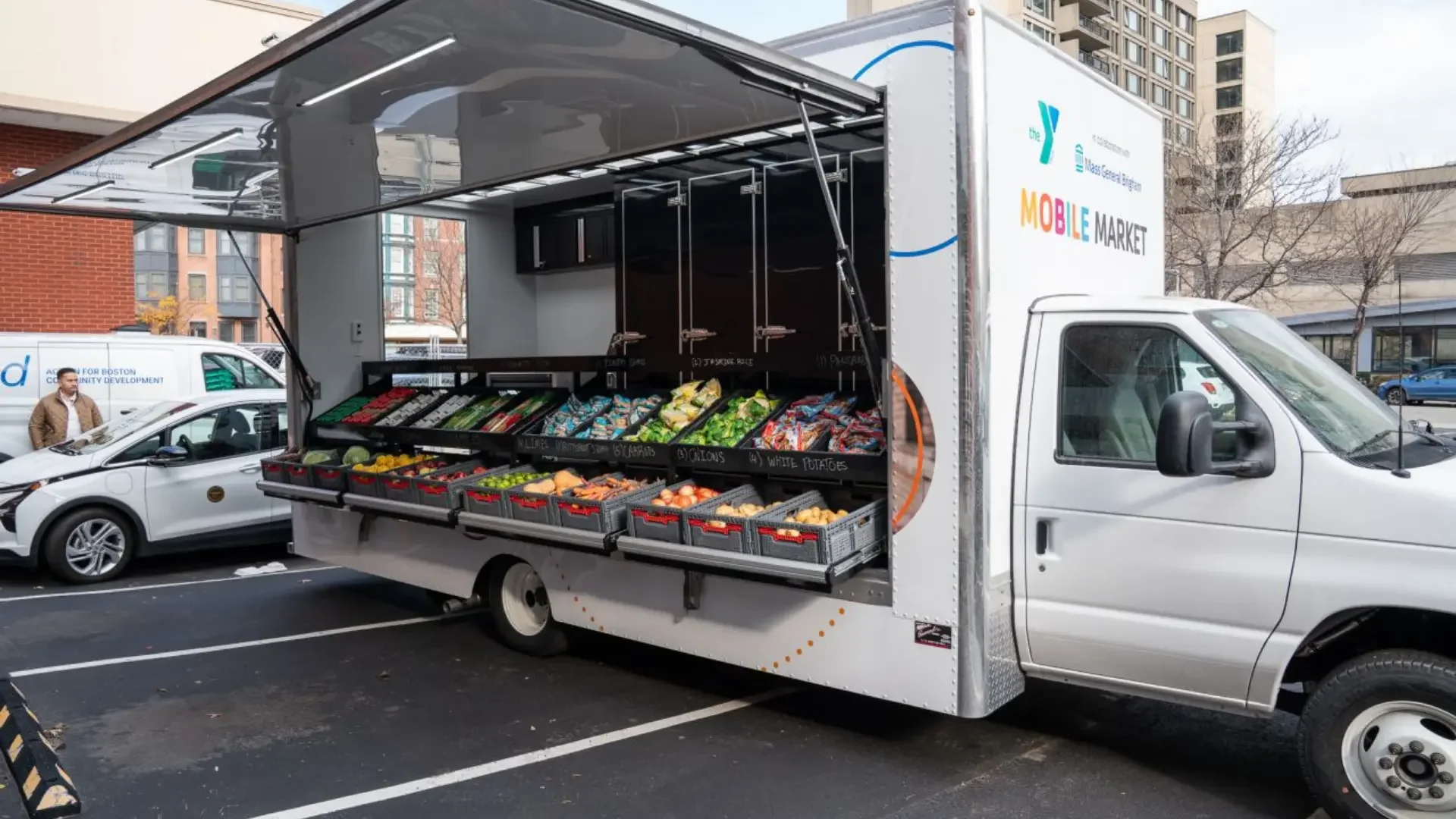
The vehicle is the most visible part of a mobile market. It's also usually the biggest capital decision. Choosing between a mobile market truck, trailer, or van involves tradeoffs between cost, capacity, operational flexibility, and customer experience.
There's no universally right answer. But there are clear factors that should guide the decision.
The Full-Size Truck Option
Purpose-built mobile market trucks offer the most capacity and the best customer experience. A well-designed grocery truck provides a walk-up or walk-in shopping environment that feels like a small store or a market. Customers can browse, compare products, and select their own items. Much closer to a traditional grocery experience than other options.
Trucks typically range from 16 to 26 feet in length. They can carry 4,000 to 12,000 pounds of product depending on configuration. Built-in refrigeration maintains consistent temperatures. Display fixtures, lighting, and signage create a professional presentation.
The tradeoffs are real. Trucks cost more: typically $150,000 to $500,000 for a purpose-built unit with refrigeration and fixtures. They may require more skilled drivers, potentially CDL certification depending on weight class. They're harder to park in tight spaces. Fuel costs are higher.
Trucks make sense for programs with significant stop volumes, multiple routes, or a goal of creating a flagship customer experience. They're the standard choice for established food bank mobile markets and health system programs.
The Trailer Option
Trailers cost less than trucks. Typically $100,000 to $170,000 for a fully equipped mobile market trailer. They can offer comparable capacity and customer experience, particularly larger trailers in the 20 to 24 foot range.
The key advantage is capital cost savings. A trailer plus tow vehicle often costs less than a purpose-built truck, especially if the organization already has a suitable tow vehicle or can use one for multiple purposes.
The tradeoffs: trailers require a capable tow vehicle and someone comfortable with trailering. Setup and breakdown take longer. You can't just park and open. Maneuverability is more challenging, limiting some stop locations. The tow vehicle ties up another asset during market hours. Trailers are harder to insure.
Trailers make sense for programs with limited capital budgets, existing tow vehicles, or stop locations with ample space. They're common among smaller nonprofits and rural programs where parking constraints are minimal.
The Van or Small Truck Option
Cargo vans and small box trucks, 10 to 14 feet, offer the lowest entry point. Often $75,000 to $150,000 with basic refrigeration and shelving. They're the easiest to drive, park, and maintain. Insurance and fuel costs are lower.
The tradeoffs are significant. Capacity is limited. A cargo van might carry 500 to 1,000 pounds of product compared to 3,000+ for a full-size truck. The customer experience is more limited too. Often handing products through a window or displaying on tables outside the vehicle rather than allowing customers to shop inside.
Vans make sense for highly targeted programs serving specific populations. A dedicated senior housing route. A hospital campus. A small neighborhood. They work as starter vehicles for programs testing the model before committing to larger investments. They don't work well for programs trying to serve as a primary grocery source for a broad area.
Key Features to Prioritize
Regardless of vehicle type, certain features matter more than others.
Refrigeration is non-negotiable for produce quality. Adequate cooling capacity for your climate and product mix prevents spoilage and maintains food safety. Underpowered refrigeration is a common regret.
Display fixtures shape the customer experience. Well-designed bins, shelving, and product presentation make shopping intuitive and appealing. Poor layouts create confusion and slow transactions.
Electrical capacity supports refrigeration, lighting, POS systems, and EBT equipment. Generators or robust battery systems need to run reliably through a full day of stops.
Durability matters for a vehicle that will rack up miles on varied roads and endure daily setup/breakdown cycles. Commercial-grade construction costs more upfront but reduces maintenance headaches.
New vs. Used
New vehicles cost more but come with warranties, known maintenance history, and the ability to customize for your specific needs. A new purpose-built refrigerated food truck is designed for this use from the start.
Used vehicles cost less but carry risks. Converted vehicles may have compromises in layout or systems. Unknown maintenance history can mean expensive surprises. Useful life may be shorter.
The calculus depends on your budget constraints, mechanical expertise, and risk tolerance. Programs with tight budgets often start used and upgrade later. Programs with adequate capital often find new vehicles worth the premium.
Matching Vehicle to Program
The right vehicle matches your operational reality. How many stops per week? How much product per stop? What are parking constraints at your locations? Who will drive? What's your realistic budget including operating costs?
A program planning 20 stops per week serving 50+ customers each needs a full-size truck. A program running a targeted 8-stop route for senior housing might do fine with a van. A program with a $120,000 vehicle budget and an existing pickup truck should look at trailers.
The vehicle enables the program, but it doesn't define it. Programs succeed or struggle based on community relationships, operational consistency, and sustainable funding. Not primarily on whether they chose a truck or trailer.
For more context on mobile market operations, see: What Is a Mobile Market?
