
Mobile Markets as Last-Mile Delivery: An Alternative to Apps
Grocery delivery apps have transformed how many people shop. But the delivery model has significant gaps. Areas it doesn't serve well. Populations it excludes. Fees that don't work for everyone.
A mobile market offers an alternative last-mile approach worth considering.
Where Delivery Apps Fall Short
Grocery delivery services have expanded rapidly, but their coverage isn't universal.
Geographic limitations persist. Delivery services prioritize dense, affluent areas where order volumes are high and delivery economics work. Rural areas, small towns, and lower-income urban neighborhoods often have limited or no delivery options.
Technology barriers exclude many potential customers. Ordering requires a smartphone, reliable internet, and comfort with digital interfaces. Older adults, low-income households without data plans, and people with limited technology experience are often excluded.
Minimum orders and delivery fees make small purchases uneconomical. A household wanting $15 of groceries can't justify a $10 delivery fee plus service charges. Delivery economics favor larger, less frequent orders. Not the weekly small-basket shopping that many households prefer.
Payment limitations matter. Many delivery services don't accept SNAP/EBT benefits, excluding food-insecure households that rely on them. Even services that accept EBT may have confusing interfaces or additional restrictions.
Loss of selection control frustrates some customers. Produce quality is variable when someone else selects your items. Substitutions may not match preferences. The tactile experience of choosing your own food disappears.
Mobile Markets as an Alternative
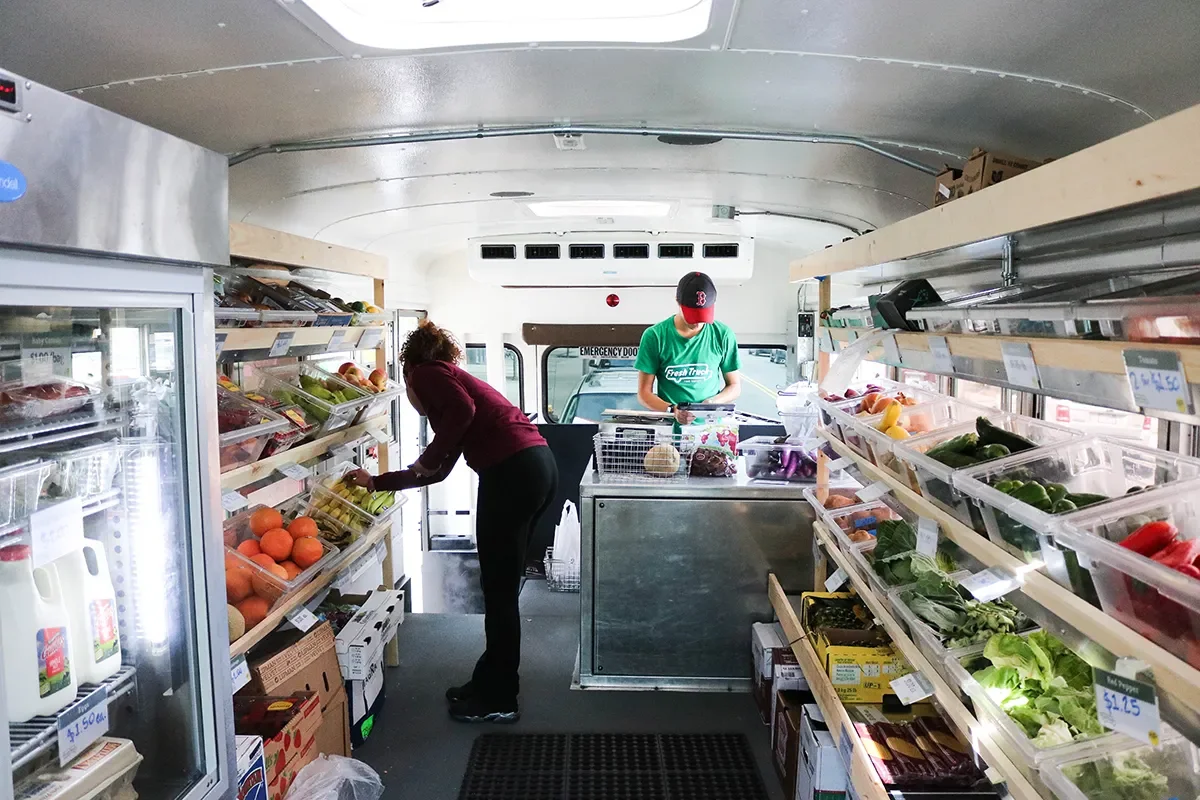
A mobile market truck addresses many of these gaps differently.
Geographic reach follows need rather than profitability. A mobile market can serve rural routes, small towns, and underserved neighborhoods that delivery services skip. The economics work differently. The community benefit justifies routes that pure profit calculations wouldn't support.
Furthermore, no technology is required to participate. Customers shop in person, pay with cash, card, or EBT, and carry their purchases home. Digital literacy isn't a barrier.
Small purchases are welcome. There's no minimum order. No delivery fee. No pressure to buy more than you need. A customer can buy three items or thirty.
SNAP/EBT is accepted seamlessly. Benefits work just like at any grocery store. There's no app interface to navigate, no separate checkout process.
Customers select their own products. They can examine produce, compare options, and choose exactly what they want. The shopping experience remains face-to-face.
Where Mobile Markets Have Advantages
For certain use cases, mobile markets outperform grocery delivery services.
This is evident in serving seniors and disabled populations, orlder adults who struggle with apps, all of whom often welcome in-person shopping close to home. The social interaction is itself valuable.
Mobile markets each rural communities. A weekly mobile market route serving multiple small towns can provide fresh food access that no delivery service would offer.
They support SNAP-dependent households. For families relying on food assistance, mobile markets provide a straightforward way to spend benefits without technology barriers or stigma.
They build community connection. Mobile markets become social touchpoints, and regular events where neighbors gather. Where delivery services are transactional, mobile markets are relational.
Where Delivery Has Advantages
Mobile markets don't win every comparison.
Selection breadth: A delivery service connected to a full supermarket offers thousands of products. A mobile market offers dozens to hundreds.
Convenience for some: Customers who are comfortable with apps and want groceries without leaving home find delivery more convenient than waiting for a market visit.
Availability: Delivery services operate daily or even multiple times daily. Mobile markets typically visit any given location weekly.
Complementary, Not Competing
For most grocers and food systems, the question isn't delivery versus mobile markets. It's how both fit into a complete distribution strategy.
Delivery serves customers who prefer it and can access it. Mobile markets serve those who can't or won't use delivery. Together, they extend reach further than either one alone.
A regional grocer might offer delivery in its main market area while running mobile market routes to outlying communities. A food hub might use delivery for restaurant and institutional customers while running a mobile market for direct consumer sales.
The goal is getting food to people who need it, however they prefer to receive it.
For more on commercial mobile market models, see: The Mobile Grocery Store Model.
