
Which State Is Leading the Mobile Market Revolution?
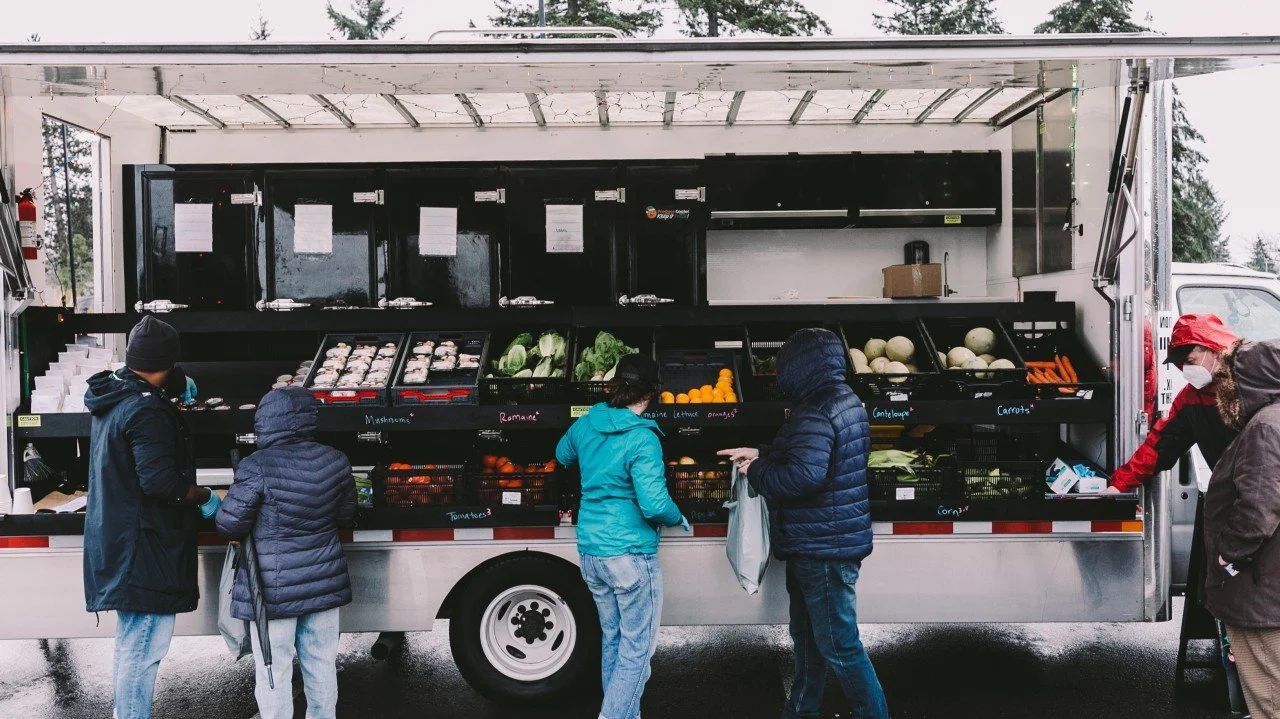
If you want to understand how serious a state is about food access, look at how they treat mobile farmers markets.
Mobile markets are one of the simplest, fastest ways to get fresh food into communities that grocery stores forgot. No zoning battles. No 10-year timelines. Just wheels, good food, and people.
Yet policy hasn’t caught up everywhere.
Here’s the honest snapshot of where the U.S. stands right now.
The Clear Leaders
California
California is treating mobile markets like real infrastructure.
They passed legislation that defines mobile farmers markets, unlocked WIC eligibility, and approved $20M in statewide funding for vehicles and equipment.
Washington State
Washington quietly pulled off something big.
They passed a law creating a state mobile market program and are integrating mobile markets into WIC and Senior nutrition benefits starting in 2026. This is policy designed for rural and hard-to-reach communities.
These two states are institutionalizing mobile markets.
The Smart Enablers
Massachusetts
No flashy law, but arguably the best economics.
Their SNAP incentive program treats mobile markets the same as farmers markets and farm stands. Dollar-for-dollar produce matches, statewide. That’s how you make mobile markets sustainable without constant grants.
New York
Strong incentives, real funding, clear agency support.
Mobile markets can access resiliency grants, and plug into emergency food planning. New York understands that mobility equals resilience.
New Jersey & Minnesota
Both states are funding mobile markets through food access investment programs.
They’re not romanticizing the model. They’re funding trucks, refrigeration, and operations like any other food access infrastructure.
The Emerging Movers
Illinois is actively legislating definitions and rules for mobile farmers markets.
Virginia explicitly includes mobile markets in its food access grant programs.
Texas is cleaning up mobile food regulations, laying groundwork but not investing yet.
These states are halfway there. The intent is visible. The capital isn’t fully deployed.
And then there’s… everyone else
Most states still treat mobile markets as:
nonprofit side projects
health pilots
temporary solutions
They rely on local heroes, soft money, and volunteer energy.
That doesn’t scale.
The Winning Combo
States that are winning are doing three things:
Defining mobile markets in law
Allowing full participation in nutrition benefits
Funding vehicles and infrastructure, not just programs
When those three align, mobile markets stop being “nice ideas” and start becoming systems.
Planning a mobile market?
Get the year-one budget worksheet we use with every new operator. Vehicle, equipment, staffing, produce, insurance, contingency. Opens as a Google Sheet you can copy and edit.
Built from 60+ programs launched in 26 states.
