
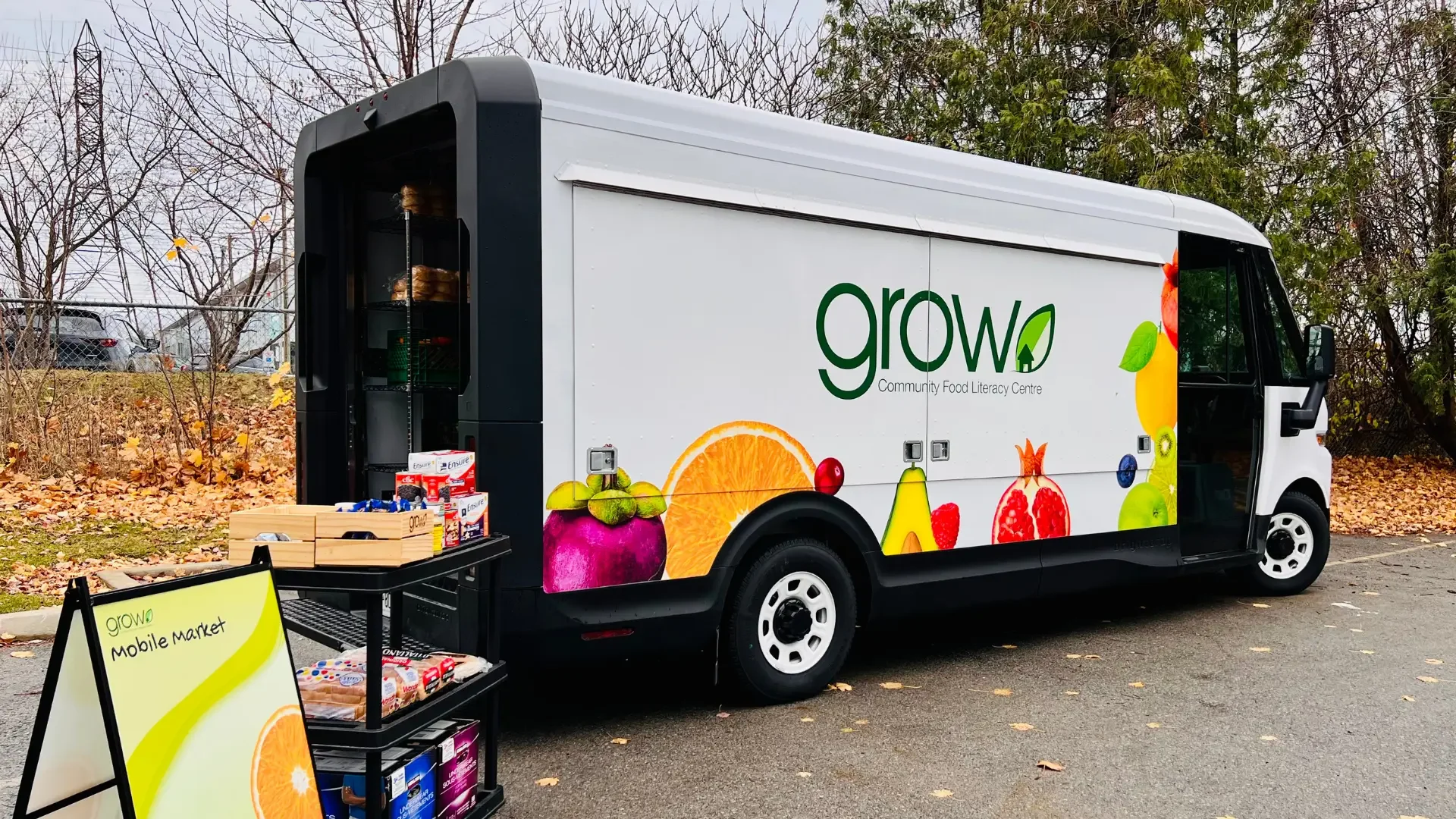
Starting a mobile market is more straightforward than most organizations expect. It's also more work than it looks from the outside. The vehicle is visible, but it’s the web of decisions behind the scenes about building community relationships, seeking funding, staffing, and operations determine whether the program succeeds.
This guide walks through practical steps from planning through first operations. It's based on what we've seen work across food banks, health systems, municipalities, and community organizations over the past decade from coast to coast.
Before You Begin: Assessing Fit
Mobile markets solve a specific problem: getting fresh food to places where it's otherwise unavailable. Before investing, confirm this is actually the problem you're trying to solve.
A mobile market makes sense when geographic areas in your region lack adequate grocery access. It makes sense when transportation barriers prevent the population you serve from reaching existing stores. It makes sense when your organization can commit to ongoing operations, not just a one-time project.
A mobile market may not fit if affordability is the primary barrier rather than access. A nearby store that people can't afford doesn't get solved by introducing another store. It may not be a fit if you're seeking a short-term initiative or expecting quick self-sustainability. Most mobile market programs don't hit either target.
We've seen organizations launch without clearly identifying the need. Some succeeded through persistence and multiple iterations. Others invested heavily in vehicles that now sit underutilized.
Step 1: Understanding Community Need
Start by mapping food access in your service area. Where are the grocery stores? Where are the gaps?
USDA food access research provides baseline data and some has been taken down recently, but local knowledge reveals what national datasets miss. A store that closed last year. A neighborhood where the nearest supermarket requires taking two buses. A senior housing complex far from any fresh food source.
Community input is essential. Talk to residents, community organizations, churches, schools, and healthcare providers in the areas you're considering. What do people actually need? Where do they currently shop? What times of day or days of the week would work best? These conversations often reshape initial assumptions and influence planning.
Identify potential partners early. Organizations working on food access, health, or community services may become collaborators, referral sources, or stop location hosts.
Step 2: Defining Your Operating Model
Several key decisions shape daily operations.
Product selection depends on customer base and sourcing. Most mobile markets focus on fresh produce but also carry eggs, dairy, bread, and some pantry staples. Some source from local farms, while others work with distributors or food bank networks.
Pricing reflects your mission and funding. Some programs sell at retail prices aiming to break-even. Others subsidize significantly. Some operate on sliding scales. Your pricing affects both who you reach and how much funding you need.
Stop locations require balancing coverage with consistency. More stops means broader reach but thinner presence at each. Fewer stops means deeper relationships but less coverage. Most programs start with 8 to 15 stops per week and build from there.
Staffing models vary. Paid staff provide consistency but increase costs. Volunteers reduce expenses but require ongoing coordination, recruiting and training. Many programs use a hybrid: paid coordinator with volunteer support.
Step 3: Choosing Your Vehicle
The vehicle decision involves tradeoffs among cost, capacity, and operational flexibility.
Full-size mobile market trucks offer the most capacity and best customer experience. Purpose-built trucks with refrigeration and display fixtures typically run $150,000 to $500,000. They require capable drivers and cost more to operate.
Trailers cost less, usually $100,000 to $170,000, but need a tow vehicle. Setup takes longer. Maneuvering requires skill. They work well for programs with existing trucks or ample stop location space.
Vans and small trucks offer the lowest entry point but limit capacity significantly. They work for targeted programs serving specific populations but struggle as primary mobile grocery vehicles for broader coverage.
Key features to prioritize regardless of vehicle type: adequate refrigeration for your climate, display fixtures that make shopping intuitive, a POS system that accepts SNAP and EBT, and sufficient electrical capacity.
Step 4: Funding Your Launch
Startup costs fall into three buckets.
Vehicle and equipment represent the largest expense: $150,000 to $500,000. Add POS systems, scales, tents, and supplies for another $5,000 to $15,000.
Initial operating capital covers inventory, staffing, fuel, and overhead for the first months before the program stabilizes. Plan for three to six months: often $30,000 to $75,000.
Program development includes community outreach, marketing, staff training, and launch events. Budget $5,000 to $15,000.
Funding sources include USDA programs, foundation grants, corporate sponsorships, health system partnerships, and municipal funding. Most successful programs combine multiple sources. Depending entirely on one funder creates fragility.
The sustainability question looms from day one. Grant funding often covers launch but not ongoing operations. Build a diversification plan early.
Step 5: Operations Setup
Several foundations need to be in place before first sales.
Permits and licensing vary by jurisdiction. Mobile vendor licenses, health permits, business registration, and parking agreements may all be required. Research early. Some jurisdictions process quickly. Others take months.
Insurance needs include commercial auto, general liability, and potentially product liability. Work with a broker familiar with mobile food operations.
SNAP and EBT authorization is essential for serving food-insecure customers. Apply through USDA's Food and Nutrition Service. The process takes weeks to months, so start early.
Inventory sourcing should be established before launch. Whether working with food banks, distributors, or farms, confirm suppliers can reliably deliver what you need on your schedule.
Step 6: Building Community Trust
Success depends on community relationships as much as operational execution.
Pre-launch outreach matters. Before your first stop, people need to know you're coming. Work with community partners. Distribute flyers at churches, community centers, and clinics. Connect with local leaders who can vouch for you.
The first 90 days are a testing period. Expect modest turnout initially. Some stops will outperform others. Gather feedback. Be prepared to adjust.
Consistency builds trust over time. Showing up reliably, week after week, demonstrates commitment. Programs that succeed persist through slow early periods.
Common Mistakes to Avoid
Underestimating operational complexity is the most frequent problem. Mobile market operations involve logistics, food handling, customer service, maintenance, scheduling, and financial tracking. Organizations treating it as a simple add-on often struggle.
Launching without community relationships leads to empty stops. Trust and awareness need to be built before the first visit.
Depending on single funding sources creates vulnerability. Diversify from the start.
Expanding too quickly spreads resources thin. Excel at a manageable number of stops before growing.
Getting Started
The first concrete step is usually a feasibility assessment: documenting need, identifying partners, estimating costs, outlining funding strategy. This work clarifies whether to proceed and shapes program design.
If you're considering a mobile market, we're glad to discuss your situation. We've helped organizations think through feasibility, design programs, and build vehicles that fit their needs. Sometimes the conversation confirms a mobile market is right. Sometimes it surfaces better alternatives.
