
What Is a Mobile Market? Costs, Impact, and How They Work
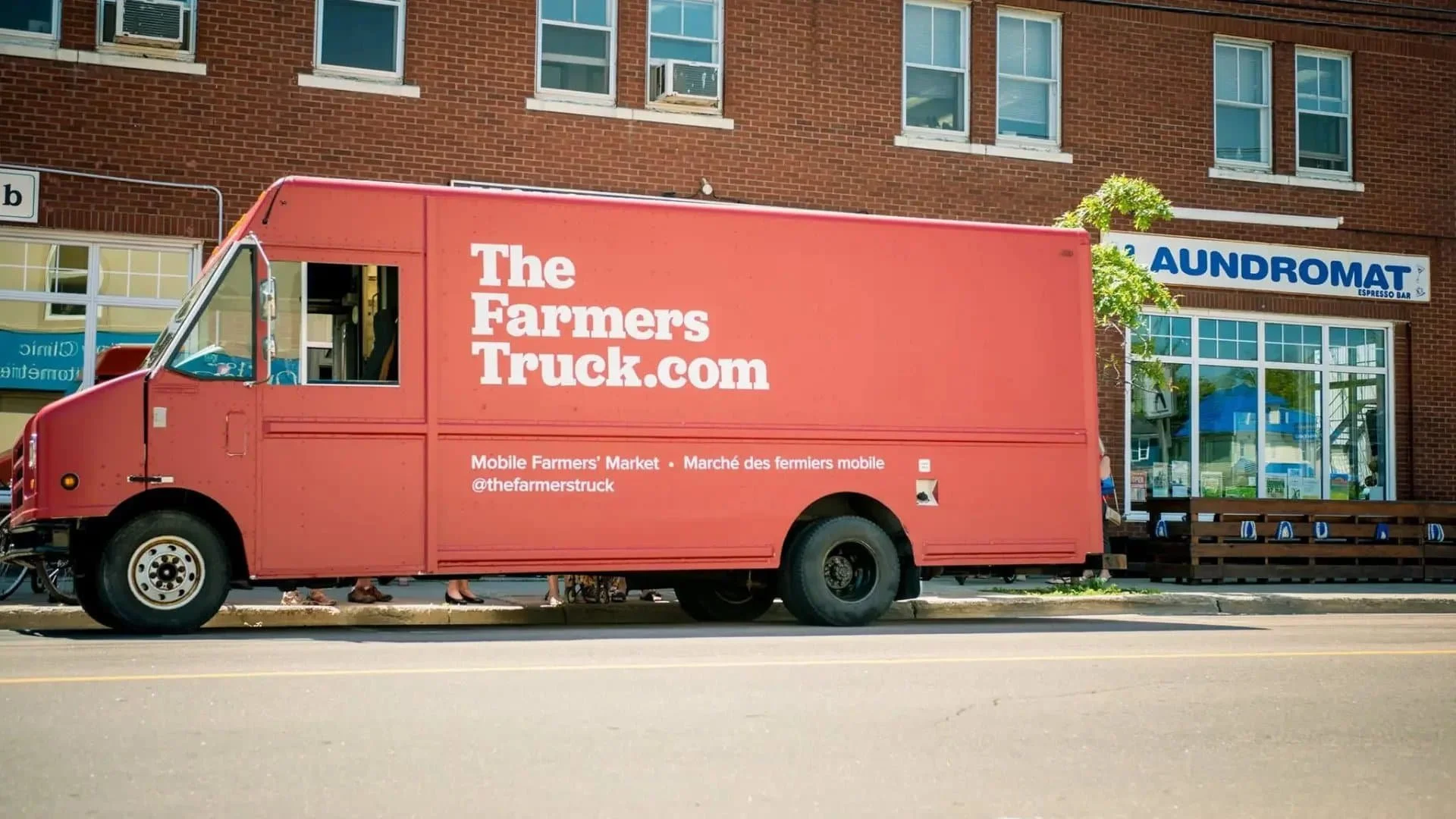
A mobile market is a vehicle designed to sell fresh groceries directly in neighborhoods with limited access to healthy food. Picture a mobile market that travels to communities instead of customers waiting to find transportation to a distant supermarket. These mobile produce markets have become one of the most practical food desert solutions available today.
The concept is simple. A refrigerated truck or trailer stocks fresh produce, dairy, eggs, and pantry staples. It follows a weekly route, consistently stopping at the same locations on the same days, come rain or shine. Customers shop in person, select their own items, and pay with cash, card, or SNAP benefits.
Mobile markets have grown significantly over the past decade. Food banks run them. Hospitals partner with them. Cities fund them. The model works because it meets people where they are instead of expecting them to overcome transportation or mobility barriers on their own.
How Mobile Markets Differ from Food Trucks and Farmers Markets
The terms get confused often. A mobile market is not a food truck. Food trucks sell prepared meals like a restaurant on wheels. Mobile grocery markets sell raw ingredients that customers take home to cook. Different licenses, different business models, different purposes.
Farmers markets are stationary events where multiple vendors gather weekly. A mobile market is a single operator that goes to the customer. A farmers market might draw shoppers from a 15-mile radius. A mobile produce market stops within walking distance of the people it serves.
Grocery delivery apps have expanded, but they require smartphones, internet access, and payment methods that exclude many households. They also charge fees that make small orders impractical. Mobile markets preserve the experience of choosing your own produce while removing the transportation problem entirely.
How a Mobile Market Truck Actually Operates
The operational model is straightforward. A mobile market truck arrives at a scheduled location, sets up product displays, serves customers for one to three hours, then moves to the next stop.
Consistency matters more than most operators initially expect. Customers plan their shopping around the schedule. Trust builds over months, not weeks. We've seen stops that drew ten customers in the first month, and serving eighty families by after six months. The pattern is common: slow starts followed by steady growth once the community knows the market will actually show up and word of mouth spreads.
Product selection varies by customer base. A stop serving senior housing might stock smaller portions and easy-prep items. A stop serving families might carry gallons of milk and larger produce quantities. Some operators source from local farms. Others work with distributors or food bank networks to keep prices low.
Payment flexibility is critical. The most effective programs accept SNAP and EBT benefits, which lets food-insecure households use their benefits close to home. Many also accept WIC vouchers and produce prescriptions from healthcare partners.
Who Runs Mobile Markets
Four main groups operate mobile markets, each with different goals.
Food banks and nonprofits are the largest category. For them, a mobile market extends their mission beyond emergency food distribution toward consistent fresh food access. Programs like Seattle's mobile produce market complement existing food pantry operations by reaching people who might not visit a traditional pantry.
Hospitals and health systems have entered the space through food as medicine initiatives. When patients are discharged with diet-related conditions and return to neighborhoods without grocery stores, clinical advice fails because the patients can’t access fresh food. A mobile market solves the access problem directly. For example, Halifax Health in Florida launched their program specifically to serve patients identified through food insecurity screenings.
Cities and public health departments sometimes operate mobile markets as part of broader food access programs. Funding comes through municipal budgets, USDA grants, or community development funds.
Grocers and food hubs run mobile markets less frequently, but the model works for reaching areas where a full store isn't viable. Farmer cooperatives have used mobile grocery stores to access customers beyond traditional farmers market channels.
What Does a Mobile Market Cost?
Costs vary by vehicle type and operating model. Here's what programs actually spend.
A purpose-built mobile market truck with refrigeration, display fixtures, and a generator typically costs $150,000 to $500,000. These are the fully equipped grocery trucks you see in established programs. Trailers cost less, usually $100,000 to $170,000, but require a tow vehicle.
Annual operating costs run $100,000 to $175,000 for a single-vehicle program making 15 to 20 stops per week (excluding the vehicle). Staffing is the largest variable. Some programs use paid employees exclusively. Others rely on volunteers. The choice affects both cost and consistency.
Revenue models differ by mission. Nonprofit mobile markets often sell at or below cost and cover the gap with grants. Hospital programs may absorb costs as community benefit expenses. Commercial operators need pricing that generates sustainable margins.
The honest picture: most mission-driven mobile markets don't sustain themselves on sales alone. They require ongoing support from grants, health system partnerships, or municipal funding. Programs that last have usually diversified their funding across multiple sources.
What Impact Do Mobile Markets Have?
Impact measurement has improved but remains uneven across the field.
Food access improvements are well documented. Mobile markets reliably increase fresh produce availability in underserved communities. Studies show meaningful increases in fruit and vegetable consumption among regular customers. When a mobile produce market is the only convenient source of fresh food within walking distance, people use it.
Health outcomes are harder to measure directly. Hospital programs tracking patient populations have seen improvements in blood pressure, blood sugar, and cholesterol among participants. The logic chain makes sense: easier access to healthy food leads to better diets for some people, which leads to better health for some of those people. But isolating the mobile market's specific contribution from other factors is methodologically difficult.
Community effects go beyond nutrition. Mobile markets become gathering points. Neighbors see each other. Community organizations share information. Isolated residents have regular human contact. Several operators have described their market as a social anchor for the neighborhoods they serve.
What we don't have: large-scale studies comparing communities with and without mobile markets over many years. Most evidence comes from individual program evaluations, so it is advisable to avoid oversimplifying or generalizing impact from individual data points. Honest Tradeoffs and Limitations
Mobile markets solve specific problems. They don't solve everything.
Scale is inherently limited. A single vehicle can serve hundreds of households weekly. It cannot serve tens of thousands. Mobile markets are one piece of a food access strategy, not a complete solution for metropolitan-scale food insecurity.
Weather can disrupt operations. Heat, cold, rain, and snow affect both the schedule and customer turnout. Programs in harsh climates need backup plans and should plan for uneven months.
Funding sustainability is the most common failure point. Grants end. Hospital priorities shift. Municipal budgets change. Programs depending on a single source often close when that source disappears. The ones that survive have built funding from multiple sources.
Mobile markets address access barriers. They don't address affordability barriers for households with almost no income. They don't solve housing instability or lack of cooking facilities. They're practical and valuable, but they work best as part of broader support systems.
Is a Mobile Market Right for Your Situation?
Before committing significant resources, it helps to honestly assess fit.
A mobile market probably makes sense if you've identified specific areas with documented food access gaps, you have or can build relationships with community partners at potential stops, you can access startup capital in the $150,000 to $500,000 range, you have a realistic plan for ongoing funding beyond year one, and you have organizational capacity to run a program that requires consistent execution every week.
A mobile market probably doesn't fit if you expect it to become self-sustaining quickly, you lack community relationships in target areas, you're looking for a short-term project rather than an ongoing commitment, or you need to reach populations at a scale that would require many vehicles.
The programs that work share certain traits: patient leadership, community relationships built before launch, diversified funding, and honest measurement of both successes and failures.
Next Steps
If you're exploring whether a mobile market fits your community, health system, or food access mission, start by understanding comparable programs. Similar geography, similar customer base, similar funding model. That context is more useful than generic advice.
We've worked with food banks, hospitals, cities, and grocers across the country to design mobile market programs and build vehicles that match their specific needs. We're happy to talk through your situation, including whether a mobile market is actually the right approach for what you're trying to accomplish.
