
Canadian Food Hubs: New Federal Funding Is Now Available
A newly announced federal funding opportunity aims to help Canadian food hubs expand their operations and bring fresh food to more communities. Through the Food Hub Program, a part of Canada’s $1 billion Food-Link Fund, eligible organizations can receive funding for infrastructure, equipment, and commercial vehicles that support local food distribution. With an application deadline of December 11, 2026, this opportunity is worth exploring for any Canadian food hubs currently hoping to expand their reach.
What Is the Food Hub Program?
Administered by Agriculture and Agri-Food Canada (AAFC), the Food Hub Program supports investments in regional infrastructure, equipment, and larger scale logistics that connect local food producers to markets. The program works to improve how food is stored, processed, transported, and distributed in order to strengthen regional food supply chains.
Key Details to Consider
| Deadline | December 11, 2026, 11:59 pm Pacific |
| Cost share | Up to 50% from AAFC |
| Bonus | Up to 60% if your organization is majority owned or led by Indigenous Peoples, youth, women, visible minorities, persons with disabilities or 2SLGBTQI+ people |
| Maximum | Up to $25 million per organization |
| Who can apply | Not-for-profits, co-ops, Indigenous organizations and Canadian-incorporated businesses |
| Costs count from | June 11, 2026 |
| First step | A short Expression of Interest |
Funding is competitive, and applicants must demonstrate how their proposed project meets the overall program’s objectives and requirements.
How Can a Refrigerated Mobile Market Support Your Food Hub?
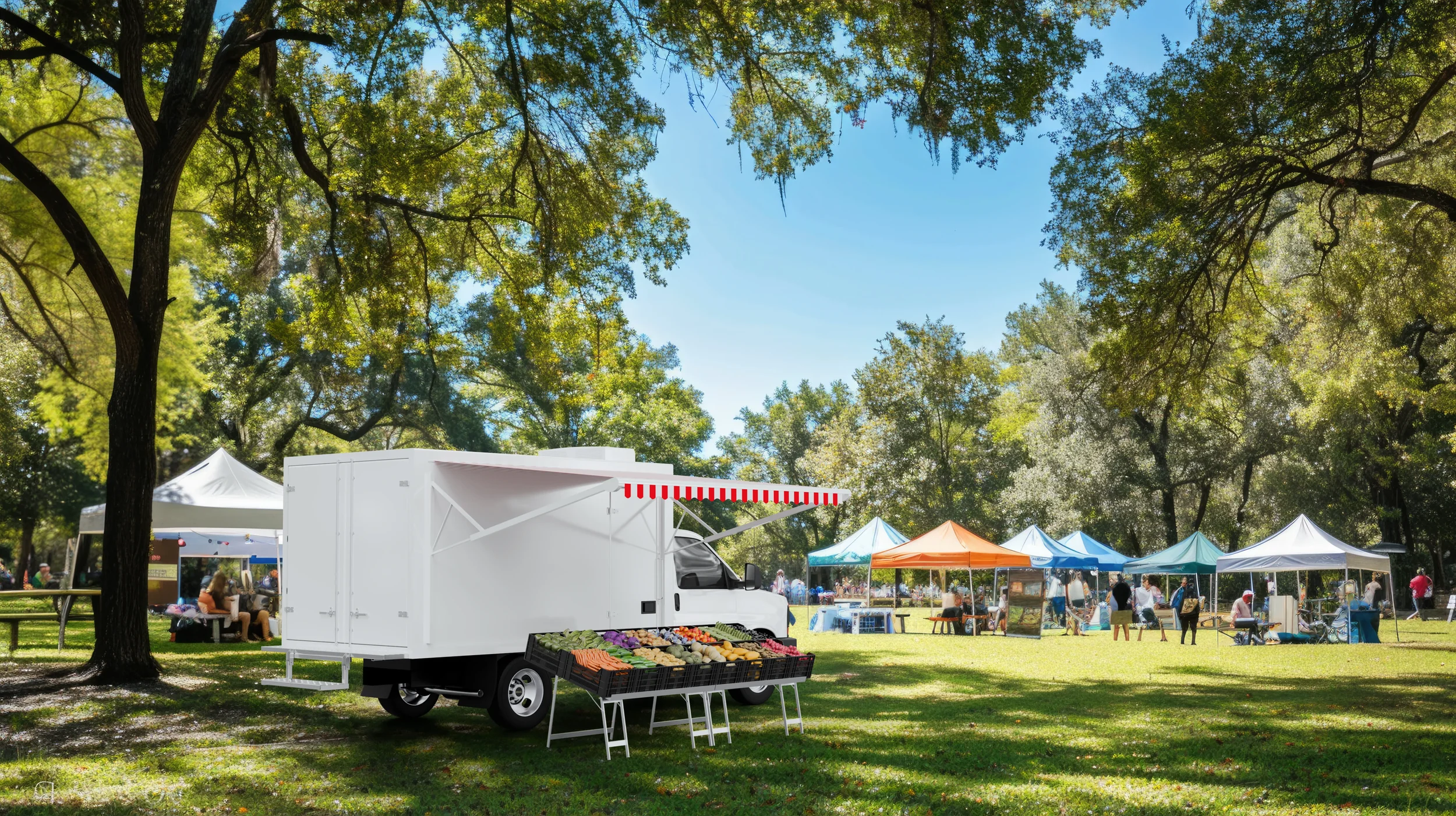
One of the biggest challenges for many food hubs includes transporting the fresh food from their facilities directly into the communities that need it most. Even if they have established relationships with local producers, transportation limitations can make it difficult to reach rural areas with limited grocery store access. A refrigerated mobile market can help to bridge that gap.
By combining food transportation with a market that can operate directly in hard-to-reach areas, food hubs can expand their distribution capabilities, support more communities, connect with more local producers, and expand their local partnerships. Under the AAFC’s Food Hub Program, commercial vehicles and refrigeration equipment may qualify as eligible expenses when they directly support an approved food hub project.
Meet Our Mobile Market Trucks
Our Cherry truck is a compact refrigerated vehicle designed to support food distribution and mobile market operation, allowing food hubs to transport fresh products throughout the week and set up a mobile market directly within the communities they serve.
Apart from the Cherry Truck, we offer a range of different vehicle models to suit different programs’ needs. Our team can help you find the right vehicle for your organization to support your unique needs and operations.
For any Canadian food hubs currently looking to expand their reach, our vehicles offer a practical way to increase your distribution capacity and offer more communities access to fresh food at the same time.
What Should Organizations Know Before Applying
Applicants must demonstrate that they have secured their share of project funding and have the capacity to complete the projects they propose. Organizations should review the official program guidelines carefully before applying. For complete eligibility requirements and application details, visit the official Food-Link Fund website.
How Farmers’ Truck Can Help
If you’re considering expanding your food hub with a mobile market, our team can help you identify how our trucks could support your expansion plans.
Planning a mobile market?
Get the year-one budget worksheet we use with every new operator. Vehicle, equipment, staffing, produce, insurance, contingency. Opens as a Google Sheet you can copy and edit.
Built from 60+ programs launched in 26 states.