
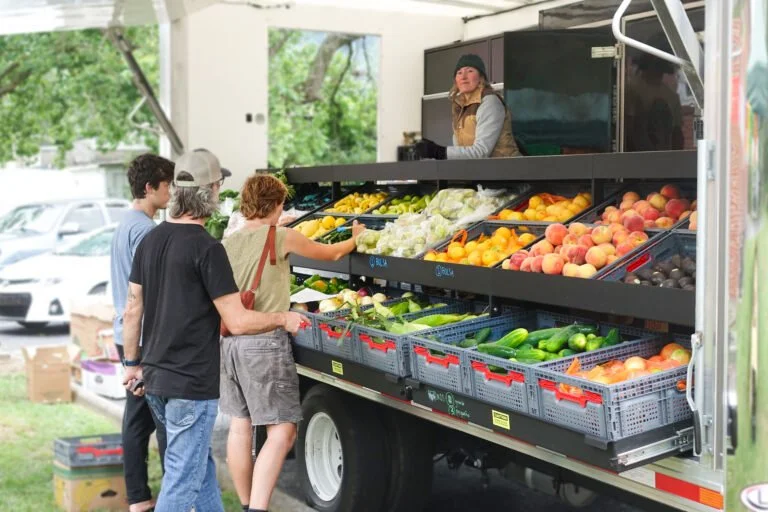
Photo Courtesy of Bounty & Soul
When we first drafted this blog, the new USDA stocking requirements for SNAP-authorized retailers had just taken effect, raising questions about what these changes would mean for mobile markets and other local community food retailers. Then, a recent and important development changed the conversation.
On November 13th, New York City Mayor Zohran Mamdani announced that his negotiations with the Trump administration had secured a nationwide 90-day extension on the new requirements, giving retailers more time to comply. This is welcome news for so many small food retailers across the country, many of whom were facing significant challenges meeting the new standards on such a tight timeline. However, while the extension provides some breathing room, the underlying new requirements still remain in place.
So, what does this mean for mobile markets? The good news is that there are two different ways retailers can qualify for SNAP authorization, and one of them could be particularly helpful for mobile markets that are more focused on produce. Here’s a breakdown of the updated requirements, what the extension changes, and what mobile market operators should know moving forward.
The New SNAP Stocking Requirements
Under the USDA’s rules, retailers can qualify for SNAP authorization through two main pathways: Criterion A, based on staple food inventory, and Criterion B, based on staple food sales.
Criterion A: Meeting Staple Food Stocking Requirements
Under Criterion A, retailers must continuously stock:
Seven varieties in each of four staple food categories, totaling 28 varieties.
Three stocking units of each variety, totaling at least 84 stocking units.
At least one perishable variety in three of the four staple food categories.
The four staple food categories are:
Vegetables or fruits
Protein
Dairy
Grains
A stocking unit refers to the format in which a product is typically sold, such as a bag, a bunch, a box, or an individual item. For traditional grocery stores, meeting these requirements may be relatively straightforward, but mobile markets often operate differently. Many mobile markets focus on fresh, locally grown produce and offer a smaller selection of complementary products. Some don’t carry grains or dairy at all. The good news is that there’s another way to qualify.
Criterion B: Qualifying Through Staple Food Sales
Under Criterion B, retailers can qualify for SNAP authorization if more than 50 percent of their total gross retail sales come from qualifying staple foods. This means a retailer may be eligible even if it doesn’t carry products from all four staple food categories.
For mobile markets that primarily sell fruits, vegetables, and other basic groceries, this distinction is especially important. Essentially, if most of your sales come from qualifying staple foods, you may already meet Criterion B without needing to make significant changes to your inventory.
One important distinction: Not every SNAP-eligible food counts as a staple food for retailer authorization. For example, products such as butter, snack bars, jerky, condiments, and certain spreads are considered accessory foods. While many of these items can still be purchased with SNAP benefits, they don’t count toward the staple food sales threshold.
For markets whose staple food sales are right at 50 percent, it’s worth confirming eligibility directly with the USDA, as its published guidance uses slightly different wording when describing the threshold for farmers markets.
What Does This Mean for Mobile Markets?
Mobile market inventory often emphasizes fresh produce and locally sourced foods. The new stocking requirements don’t necessarily mean these markets need to change their approach. The USDA specifically confirms that farmers markets and direct marketing farmers generally don’t need to meet Criterion A’s stocking requirements. Instead, they can qualify under Criterion B based on their staple food sales.
The USDA has also confirmed that farmers markets and direct marketing farmers currently authorized under Criterion A will automatically be evaluated under Criterion B if they don’t meet the updated stocking requirements during reauthorization. However, not every mobile market is automatically classified as a farmers market or direct marketing farmer. Depending on how your operation is structured, the USDA may classify your mobile market differently. It’s important to confirm your retailer classification and understand which requirements apply to your specific operation. Essentially, before making any major changes to your inventory, take a closer look at how your mobile market currently qualifies.
Do You Need to Change Your Mobile Market’s Inventory?
Not necessarily! If your mobile market already generates more than half of its gross retail sales from qualifying staple foods, Criterion B may provide a path to continued SNAP authorization without requiring you to add products that don’t make sense for your market.
It’s also crucial to understand when the new requirements will be assessed. For existing retailers, compliance may be assessed during reauthorization or other USDA eligibility reviews. Operators should continue preparing during the 90-day extension and confirm which requirements apply to their specific retailer classification.
Other mobile market operators should confirm how the requirements apply to their particular retailer classification. Even if you meet Criterion B, you may still be subject to other requirements associated with SNAP retailer authorization. Mobile market operators should keep an eye out for communications from the USDA, particularly when their SNAP authorization comes up for renewal. You can find additional information directly from the USDA itself (see resources below).
Keeping Fresh Food Accessible
The 90-day extension is a welcome step, but long-term solutions are still necessary to ensure that food access policies support local communities and retailers. For mobile markets, clear regulations and flexible eligibility pathways are essential to continuing their mission of bringing fresh, nutritious food closer to home. Have questions about launching or operating a mobile market? The Farmers’ Truck team is here to help you explore solutions.
Resources
For more information about the updated SNAP retailer stocking requirements and how they may affect your mobile market, you can explore the following official USDA resources:
USDA Food and Nutrition Service: SNAP Retailer Stocking Standards Final Rule
USDA Food and Nutrition Service: What Do SNAP Retailers Need to Stock?
Federal Register: SNAP Retailer Stocking Standards Final Rule (2026)
Disclaimer: This article is intended for general informational purposes and reflects USDA guidance available as of November 2026. SNAP retailer eligibility depends on individual circumstances and applicable federal requirements. Mobile market operators should consult official USDA resources for the most current information.
100% written by a human.